Table Of Content
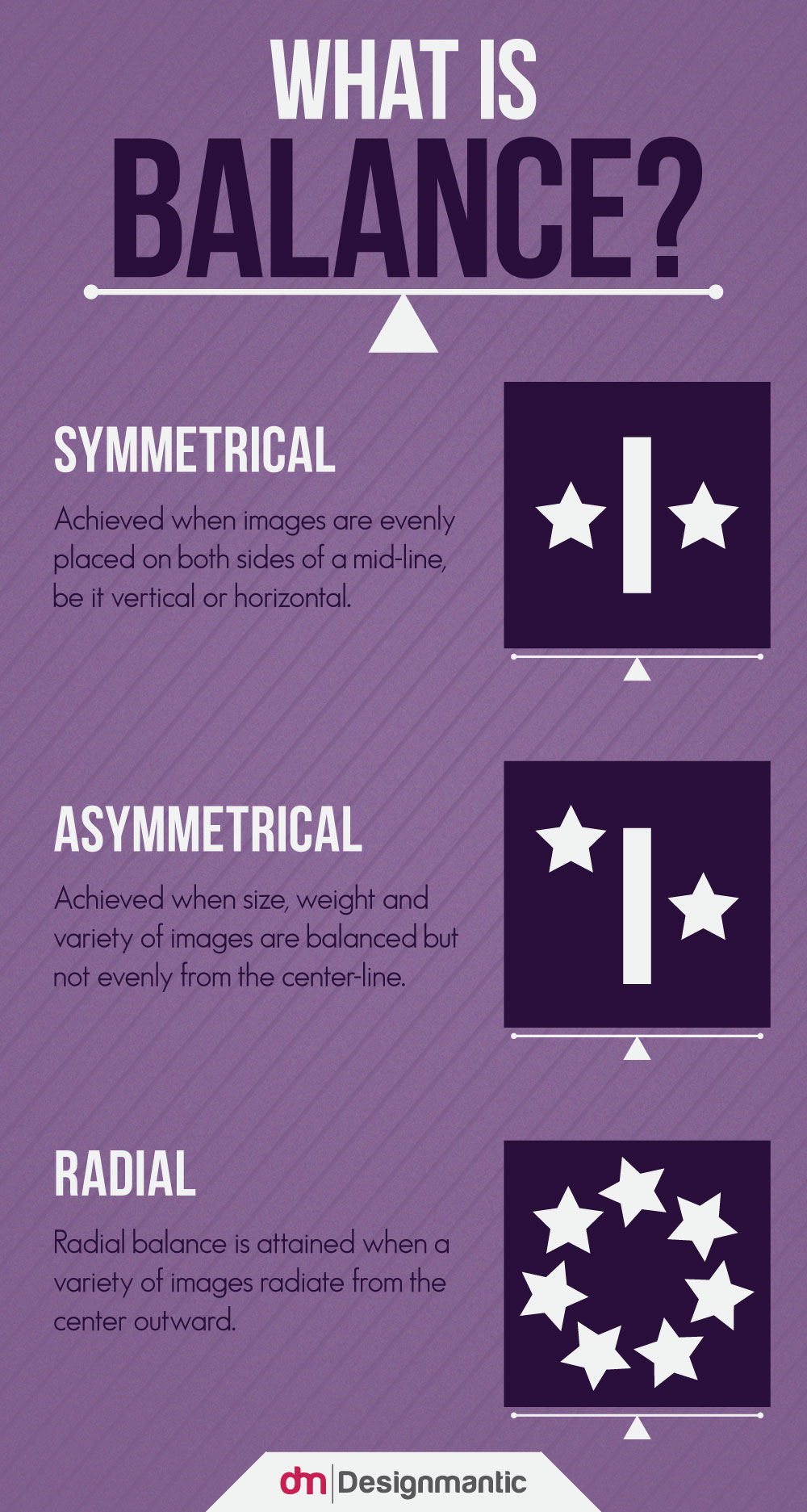
But how exactly do you ensure that your design is balanced? Use attributes like color, texture, and size to play with your options. Symmetrical balance is often used to express a sense of grace, elegance, or formality.
The effect of mix design method on performance of asphalt mixtures containing reclaimed asphalt pavement and ... - ScienceDirect.com
The effect of mix design method on performance of asphalt mixtures containing reclaimed asphalt pavement and ....
Posted: Thu, 16 Feb 2023 15:45:32 GMT [source]
Hire LogoPoppin for Your Next Big Thing!
Our perception of color is relative to the colors around it. In the example below, the red square demands our attention, giving it more visual weight than the yellow square. However, as we’ll see in the next example, this is not always true. Size is the most obvious factor that contributes to visual weight. In the image below, the left square carries more visual weight than the right square.
What is an example of balance in the principles of design?
It doesn’t matter how amazing a design concept may be or how vibrant the colors used. If there is no visual appeal, everything just falls apart. So, the key to creating amazing marketing creatives that engage customers is striking the right amount of balance. Know where to use what kind of balance and you are halfway to mastering all of your design projects. Without this neutralizing effect a design could become an asymmetrically balanced design.
Balanced and unbalanced designs in ANOVA models
Anyone who considers themselves a designer knows the importance of having balance between the different elements of their design. But despite that, there will be times when you look at an illustration or a design, and you’ll as if something just isn’t right with it. Rather than balancing both sides of a centered line, you can also choose to use radial balance around a single point (like a snowflake). The concepts of balance discussed above are applicable to all kinds of designs.
Without visual balance, viewers might not see all areas of the design. They probably won’t spend any time in areas with less visual weight or interest. Any information in those areas could easily go unnoticed.
How to Include Balance in Web Designs
It has no vertical alignment, but its horizontal alignment and the uniform size of the images balance it out. Textures, colors, the position of elements, and visual weights. When there is a visible harmony in these elements, it creates an aesthetically appealing result. Symmetrical balance is achieved by placing elements in a very even fashion in the design. If you have a large, heavy element on the right side, you'll have a matching heavy element on the left.
How Many Types of Balance Are There in Graphic Design? Finding Balance in Art
In order to construct an F test, however, we also need to calculate the within-groups sum of squares. Since \(\lambda\) is not an integer there does not exist a balanced incomplete block design for this experiment. We would either need more replicates or a larger block size. Seeing as how the block size in this case is fixed, we can achieve a balanced complete block design by adding more replicates so that \(\lambda\) equals at least 1.
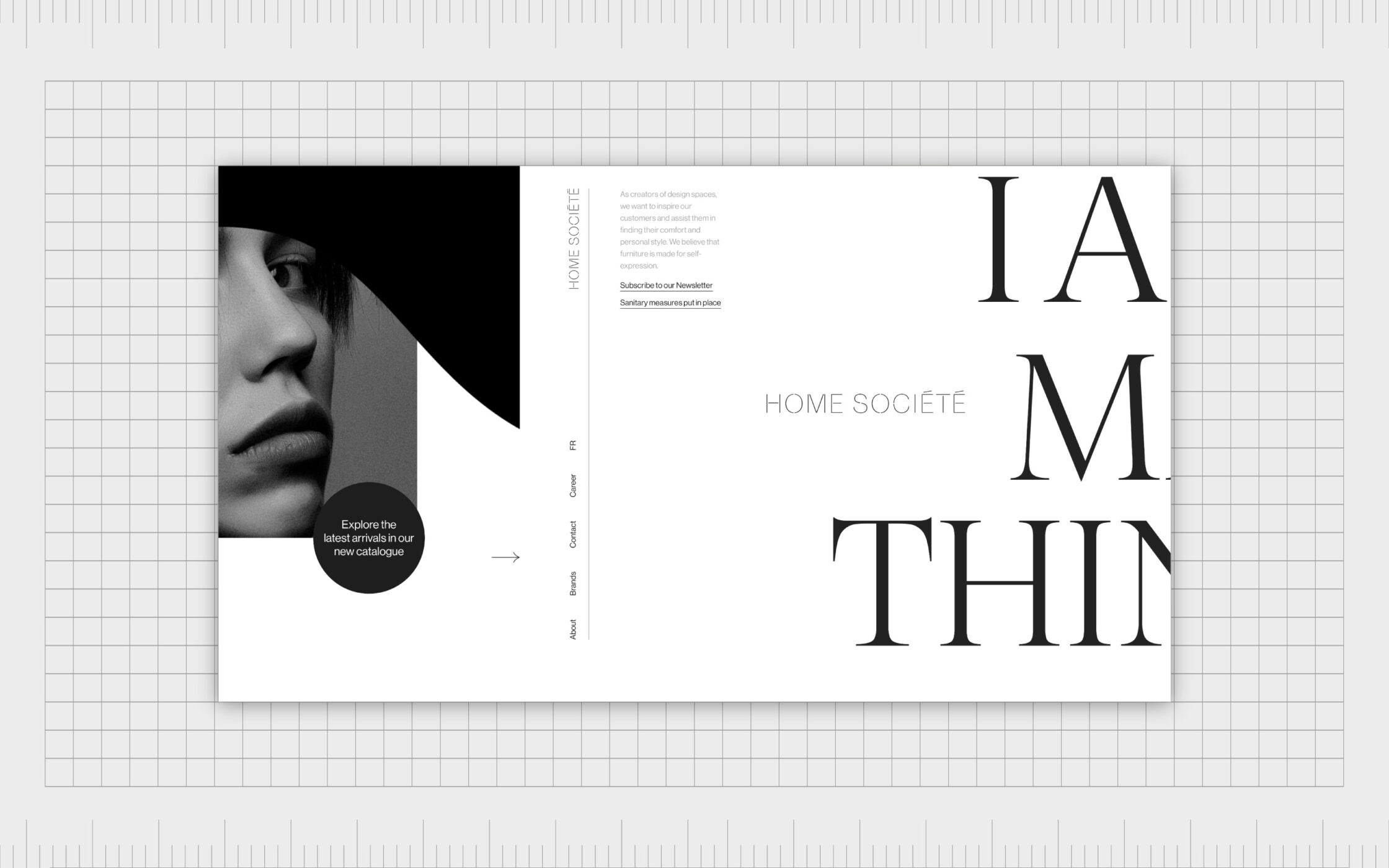
From the choice of images to the text layout, it is functional while appealing to the senses. Home furniture and accessories company Home Sociētē has a website that’s the epitome of asymmetric balance. On the left side are images, while on the right side are texts of varying sizes and font styles. The horizontal scroll is an example of balance throughout, giving the viewers a design that’s pleasing to the eyes and exciting to the senses.
If anything, the chaos is weightier on the right, but not to the point of throwing off the balance. Opera’s Shiny Demos home page isn’t circular, but the text links all seem to emanate from a common or near common center. It’s easy to imagine the whole shape spinning around one of the squares in the middle or maybe one of the corners where four squares meet. The areas down the left, along the top right and down the right, including a bit of the bottom right, all balance each other. The area on the left is larger than the area on the right, but the right has additional space on the top and bottom. The distance to an imagined fulcrum is about the same as the weights.
If you take the image above, the larger imagery of the temples to the right are offset by the longer line of smaller camel silhouettes. One of the ways to do that is by spacing out design elements of equal weight throughout the design, but in a seemingly haphazard fashion. However, once surrounded by truly chaotic design elements, those elements that you spaced out earlier will act as focal points for the gaze, bringing with it a sense of balance. And as the placement of the focal elements was natural, it doesn’t strain the eyes or the minds of their viewers. Another way to achieve balance is to increase or decrease the size of the design elements.
Discordant balance (also called off-balance!) is when elements aren’t balanced at all. This can make viewers uncomfortable and stop them in their tracks. With this type of balance, you could draw a line through the middle of your design and each side would be the same. In other words, each side is a mirror image of the other.
Let’s take a look at different balancing concepts in design, and see how professional graphic design services leverage them to boost the impact of their creations. In the custom illustration below, balance is created from position through the small elements arranged around the character in the center. In the following design, the shapes of the products being featured, and the movement around them, is balanced by the relatively plain space above and below. The intent here is to use chaos to create movement while maintaining the aesthetics. Jackson Pollock is one of the most popular abstract expressionists who created masterpieces with mosaic balance.


No comments:
Post a Comment